
This website uses cookies so that we can provide you with the best user experience possible. Cookie information is stored in your browser and performs functions such as recognising you when you return to our website and helping our team to understand which sections of the website you find most interesting and useful.
Language:
Policy brief: Protecting workers in the UK platform economy

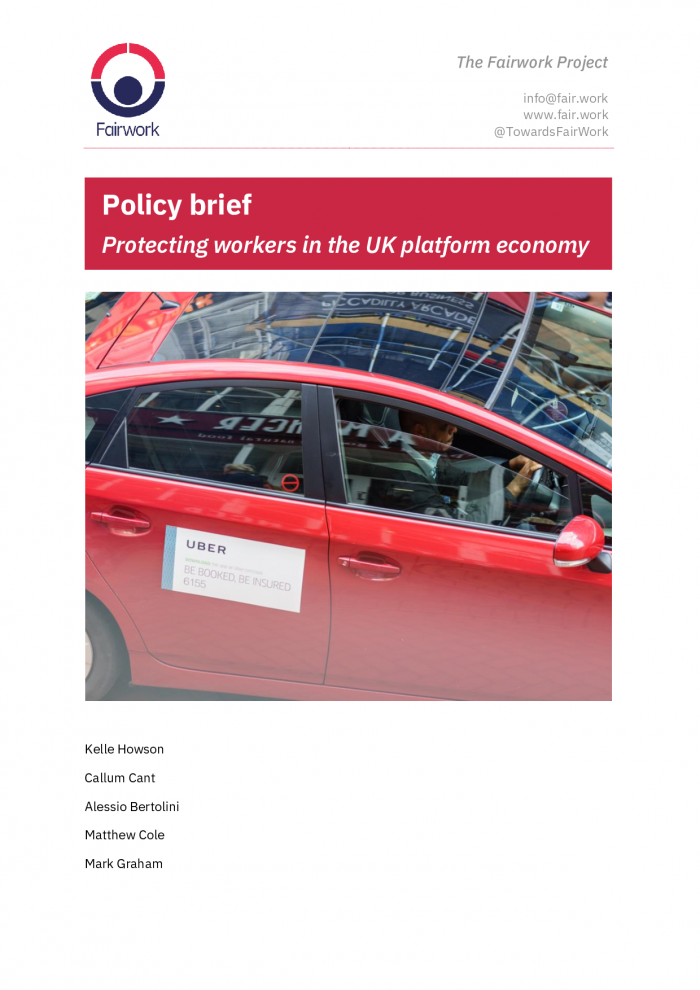
Fairwork researchers present a new policy brief urging for stronger regulation of digital labour platforms in the UK.
The number of people in the UK working for a digital labour platform more than doubled between 2016 and 2021, from 6 to 15 per cent of the adult population, a total of 4.4 million workers.
The growth of platforms has outpaced labour enforcement in almost all countries. It is clear now that regulatory action is needed to tackle their predatory and exploitative practices, which have become widespread and institutionalised.
Crucially, legislation must avoid endorsing or legitimising platforms’ characterisation of their workers as independent and autonomous, or the assertion that extending full labour rights to platform workers would endanger livelihoods. Employment reform in the UK must be based on the ultimate objective of upholding the same level of rights and protections for all workers.
Report by Kelle Howson, Callum Cant, Alessio Bertolini, Matthew Cole and Mark Graham.