This website uses cookies so that we can provide you with the best user experience possible. Cookie information is stored in your browser and performs functions such as recognising you when you return to our website and helping our team to understand which sections of the website you find most interesting and useful.
Language:
New regulation of platform work in Chile: a missed opportunity?

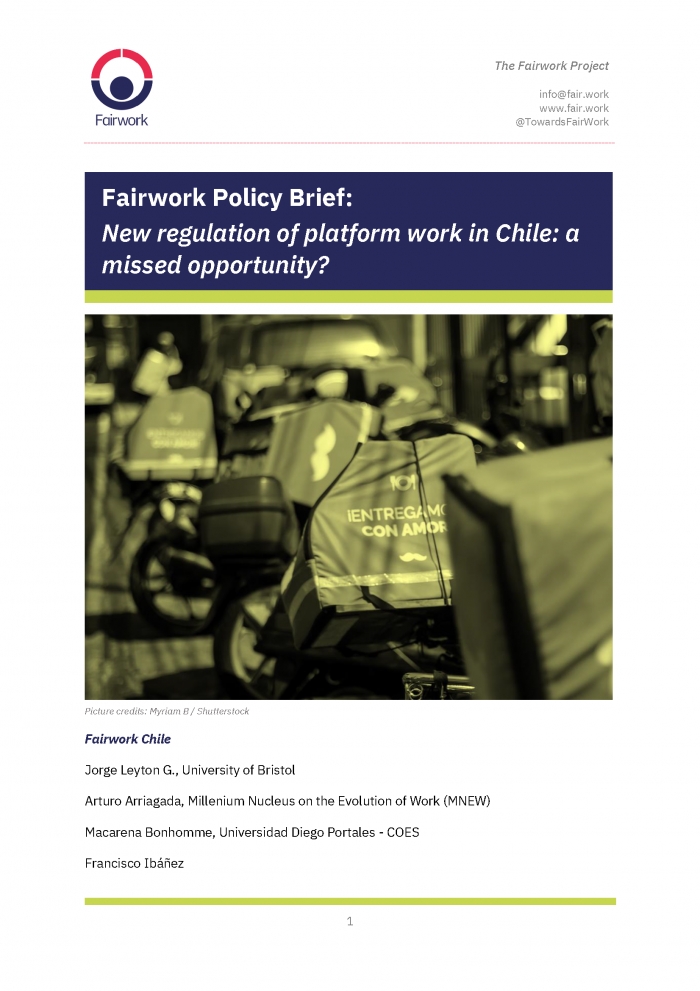
The Chilean Congress will finish reviewing a bill that regulates the legal and labour aspects of the so-called “platform work” in the coming days. If the proposed rules are approved, Chile will be one of the first countries to have a legislative answer to the question that has been debated in every corner of the world where this industry has developed: are these services provided under conditions that merit the intervention of labour law? In simple terms, are the thousands of people who work for platform companies workers, in the legal sense?
In this policy brief, the Fairwork Chile team analyse how the new law attempts to resolve the problems associated with working conditions in the sector, as well as pointing at some important gaps that may weaken its effectiveness.
Authors: Jorge Leyton G., Arturo Arriagada, Macarena Bonhomme, Francisco Ibáñez
Read report in: