
This website uses cookies so that we can provide you with the best user experience possible. Cookie information is stored in your browser and performs functions such as recognising you when you return to our website and helping our team to understand which sections of the website you find most interesting and useful.
Language:
The Gig Economy and Covid-19

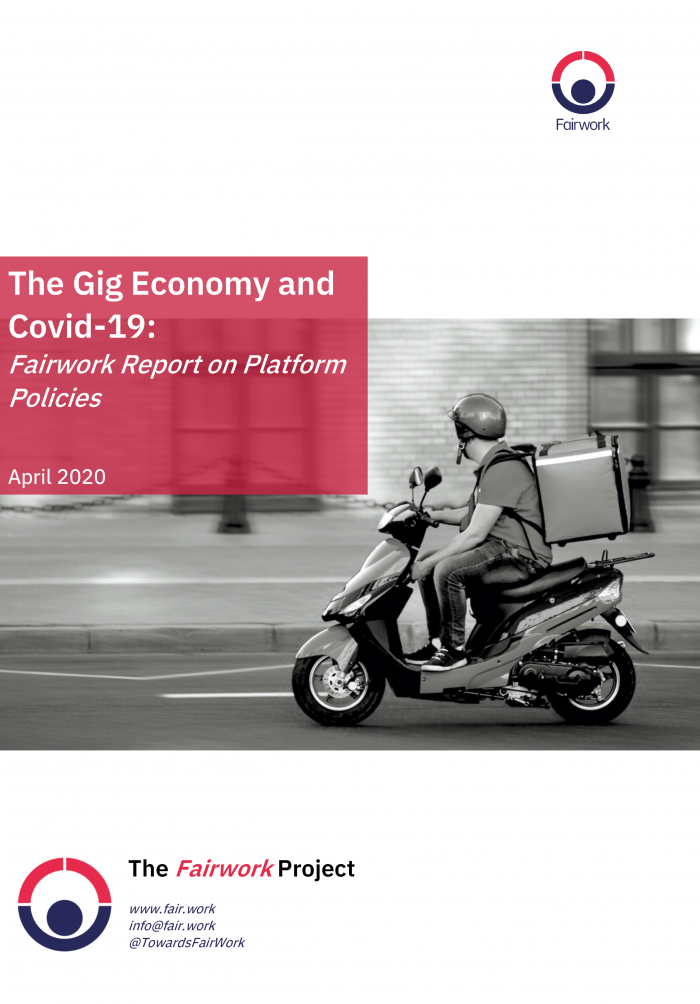
The estimated 50 million gig workers worldwide have been particularly hard-hit by the Covid-19 pandemic. Reports indicate half have lost their jobs; those still working have lost two-thirds of their income on average; and many face the impossible choice between destitution and infection, as summed up by one worker: “either I’m starving or I’m dying of coronavirus”. While those still in work perform functions essential to society, the pandemic has opened up fracture lines of inequality: not just between gig workers and others who are
currently better served by government support schemes, but also by placing added pressures on women, immigrants, and minority-ethnic groups who form a core part of the gig workforce.
So how are platforms responding? To investigate this further, the research team at the Fairwork Foundation undertook a survey of platform response policies; as of April 2020 covering 120 platforms in 23 countries across Europe, North America, South America, Asia and Africa.
Suggested citation:
Fairwork. 2020. The Gig Economy and Covid-19: Fairwork Report on Platform Policies. Oxford, United Kingdom.