Out today! The first Fairwork report evaluating working conditions in the Belgian platform economy

Evaluating the working conditions in the Belgian platform economy for the first time, the Fairwork Belgium Report for 2022 presents ratings for five digital labour platforms across different sectors, from food delivery to domestic services. The scores, ranging from 0 to 6, with none of the platforms achieving more than a score of 6, indicate that Belgian platforms have a long way to go in ensuring fair work.
Belgian platforms’ unusually low scores (for the European context) can be partially attributed to the rapid growth of the country’s platform economy in the last five years. Although a 2015 ING International Survey demonstrated the small size of the platform economy as measured against the European average, platform use had increased 10% by 2018. COVID-19 lockdowns over the past two years further propelled platform growth, especially in the food delivery sector wherein Deliveroo doubled its turnover in a single year while Takeaway grew by an estimated 50% and doubled the size of its workforce.
Belgian workers in more established, formal sectors of the economy enjoy a reasonable degree of protection and security under the Ghent system. But such protections do not necessarily extend to the less established, more informal gig economy. Although platform workers – particularly Deliveroo riders – have mobilised to protest unfair conditions, unpaid waiting times, the lack of respect from platform companies, restaurants and customers, as well as the absence of channels for communicating their discontent, the Belgian government remains focused on the rapid growth of the platform economy.
The government has enabled the classification of workers as ‘self-employed’ by way of ‘peer-to-peer’ status. Because the classification is advantageous in terms of taxation and flexibility, it has provided fertile ground for the growth of platforms. Simultaneously, however, it undermines well-established sectoral-bargaining agreements. Companies with workers classified under peer-to-peer are exempt, not only from collective agreements on the national level, but also from the typical wage and employment regulations which protect established workers in other sectors. Thus, enhanced flexibility and reduced taxation have brought with them an alarming cost: the exposure of platform workers to significant precarity.
The Fairwork Belgium Report 2022, the first independent investigation of Belgium’s platform economy, sheds light on the working conditions of platform workers and makes practical suggestions for improving them to enhance respect and dignity of workers. The report presents a set of ratings for each company (to be updated on a yearly basis) and establishes a baseline for the country’s platform economy. Through continual engagement with workers’ representatives and advocates, the Fairwork Belgium team aims to support workers in asserting their rights and requirements in a collective way. Their research reveals that poor working conditions are not inevitable – platform work can also mean fair work.
Ratings
Fairwork scores digital labour platforms based on five global principles of ‘fair work’ – Fair Pay, Fair Conditions, Fair Contracts, Fair Management, and Fair Representation. Evidence on whether platforms comply with these five principles was collected through desk research, interviews with workers, and platform-provided evidence. The evidence was then used to assign a Fairwork score out of ten to each platform.
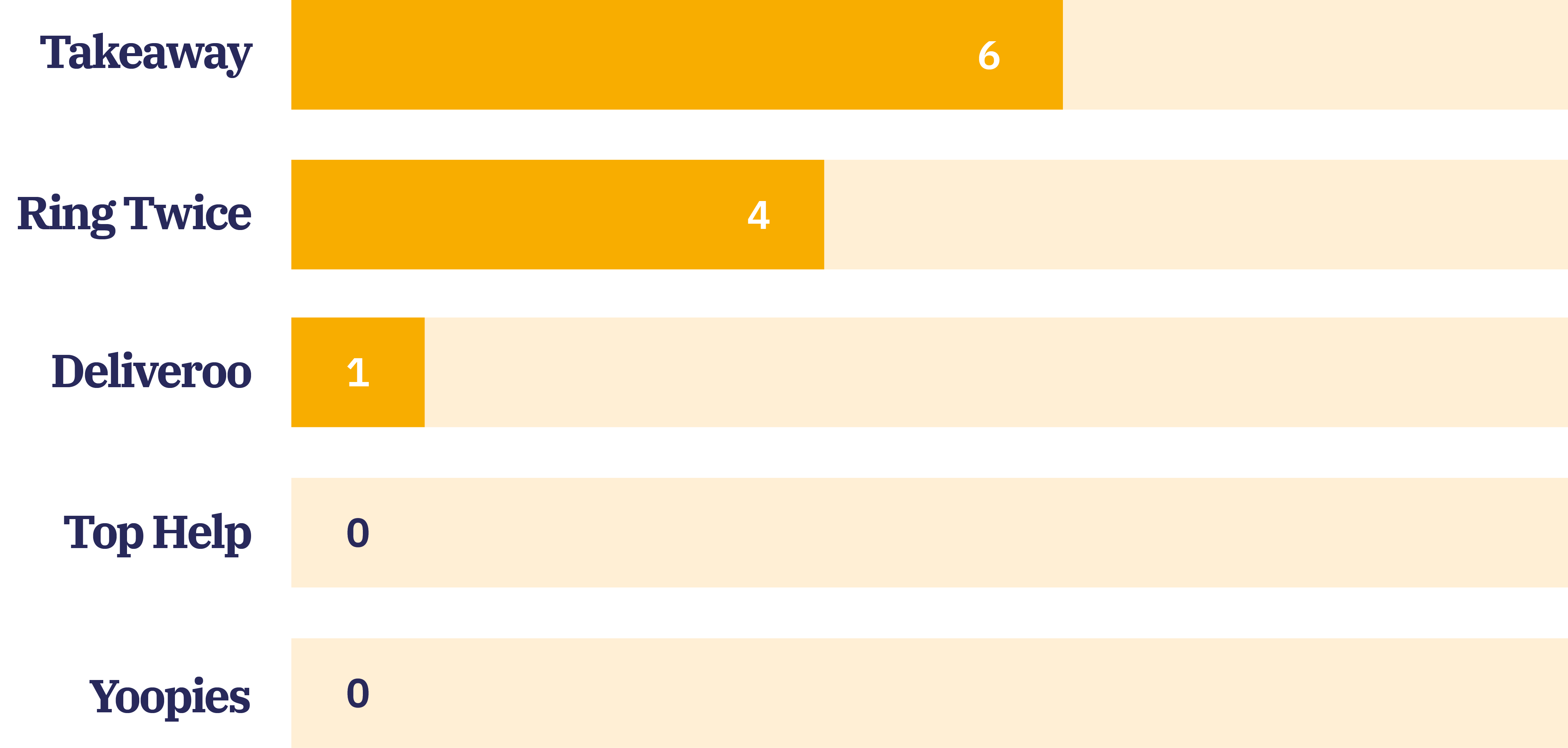
The Fairwork Belgium 2022 ratings evaluate the working conditions in five digital labour platforms: Takeaway, Ring Twice, Deliveroo, Top Help, and Yoopies. Takeaway leads the table with 6 points, followed by Ring Twice at 4, Deliveroo at 1, and Top Help and Yoopies not receiving any points. Overall, a majority of the six platforms failed to secure basic labour standards for their workers.
Key findings
- Fair Pay: Of the five evaluated platforms, only Takeaway and Ring Twice guaranteed the minimum wage after costs. Ring Twice, which relies on the peer-to-peer status and self-employment, sets ‘technical minima’, (i.e. a wage floor for each of the occupations available on the platform,) while Takeaway hires its couriers (whether as direct employees or through temporary agencies), and therefore follows minima set by sectoral agreements. Both workers and trade unions, however, contest the current pay level and are calling for the reclassification of couriers under a different sectoral agreement, with higher salary scales. The remaining platforms, which either hire workers under peer-to-peer status, or as self-employed or informal workers, could not evidence that they guaranteed the minimum wages stipulated by the relevant sectoral collective agreements.
- Fair Conditions: Takeaway, was the only platform able to evidence that it offered protection against work-related risks, and in the case of incapacity to work, and so was awarded both points under this principle. However, we strongly recommend that it ensures that all its couriers are duly informed about their rights. Although a basic insurance scheme is available on both Ring Twice and Deliveroo, we could not award the point to either. Ring Twice fails to offer a ‘work accident’ insurance and only covers peer-to-peer workers, not the self-employed. Similarly, Deliveroo failed to cover material costs (such as damage to phones, bikes) and motor vehicle insurance for self-employed workers using a motorised vehicle for delivery. Given that no other platform could evidence the existence of protections at all, demonstrating an urgent need to improve conditions swiftly.
- Fair Contracts: Deliveroo, Ring Twice and Takeaway were able to show that they provide terms and conditions in a clear, transparent and accessible form. However, only Takeaway could demonstrate that liabilities and risks of engaging in the work are shared between the platform and the workers. These poor results regarding contracts demonstrate the need for platforms to implement changes in their contracts and establish relationships with workers that are in line with national regulations.
- Fair Management: Although all platforms reviewed have communication channels allowing workers to interact with a human representative, only Ring Twice and Takeaway evidenced effective due process for decisions affecting workers. Moreover, only Ring Twice provided evidence of ensuring equity in management processes. These findings, again, indicate that more efforts to improve fair management on platforms are required.
- Fair Representation: None of the platforms fully met the principle of fair representation. Deliveroo evidenced the recent establishment of an internal body to represent workers, but the platform could not be awarded the point because it was unable to evidence any willingness to recognise, or bargain with, a trade union. As for Ring Twice and Takeaway, there was insufficient evidence of solid relations with national trade unions to award the point. This all points to the fact that most Belgian platform workers are left without institutionalised channels for worker representation, meaning that they have little or no influence over the decisions that impact their jobs.
The Fairwork Pledge
As part of Fairwork’s commitment to making platforms accountable for their labour practices, we have launched the Fairwork Pledge. This pledge aims to encourage other organisations to support decent labour practices in the platform economy, guided by the five principles of fair work.
Organisations like universities, schools, businesses, investors and charities that make use of platform labour can make a difference by supporting platforms that offer better working conditions. Organisations have the option to sign up to the Pledge as an official Fairwork Supporter or an official Fairwork Partner. Those signing up to be a Supporter must demonstrate their support for fairer platform work publicly and provide their staff with appropriate resources to make informed decisions about what platforms to use. Becoming a Fairwork Partner entails making a public commitment to implement changes in their own internal practices, such as committing to using better-rated platforms when there is a choice.