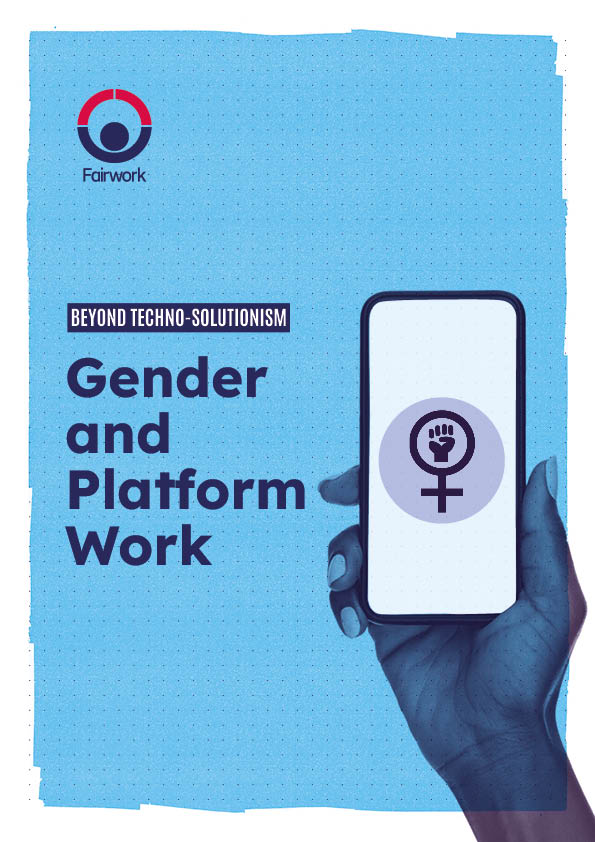
This report draws on the past four years of findings from the Fairwork project to shed light on gendered experiences in location-based platform work. The report is based on Fairwork’s research conducted across 38 countries and with over 190 digital platforms, most of which work across multiple countries.
It finds that commonplace practices in the platform economy, such as failing to guarantee a living wage, unsafe working conditions, and inadequately tackling gender-based discrimination, risk widening the gender pay gap, reducing workforce participation rates, and cementing gender inequities.
The report concludes that platforms need to be more responsive to women and gender minorities and that the tech-based solutions they are deploying are not protecting women workers. It explains how the five Fairwork principles can improve gender equity in gig work and provides a series of policy recommendations that can bring about better conditions and create more inclusive working environments.
EnglishSUMMARY HANDOUT EN
This website uses cookies so that we can provide you with the best user experience possible. Cookie information is stored in your browser and performs functions such as recognising you when you return to our website and helping our team to understand which sections of the website you find most interesting and useful.
This cookie remains on your computer for 365 days, but you can adjust your preferences at any time by clicking on the "Cookie settings" link in the website footer.
Please note that if you visit the Oxford University website, any cookies you accept there will appear on our site here too, this being a subdomain. To control them, you must change your cookie preferences on the main University website.
This website uses the following additional cookies from third party websites:
These cookies will remain on your computer for 365 days, but you can edit your preferences at any time through the "Cookie Settings" in the website footer.
This website uses Google Tags and Google Analytics to collect anonymised information such as the number of visitors to the site, and the most popular pages. Keeping these cookies enabled helps the OII improve our website.
Enabling this option will allow cookies from:
These cookies will remain on your website for 365 days, but you can edit your cookie preferences at any time via the "Cookie Settings" button in the website footer.