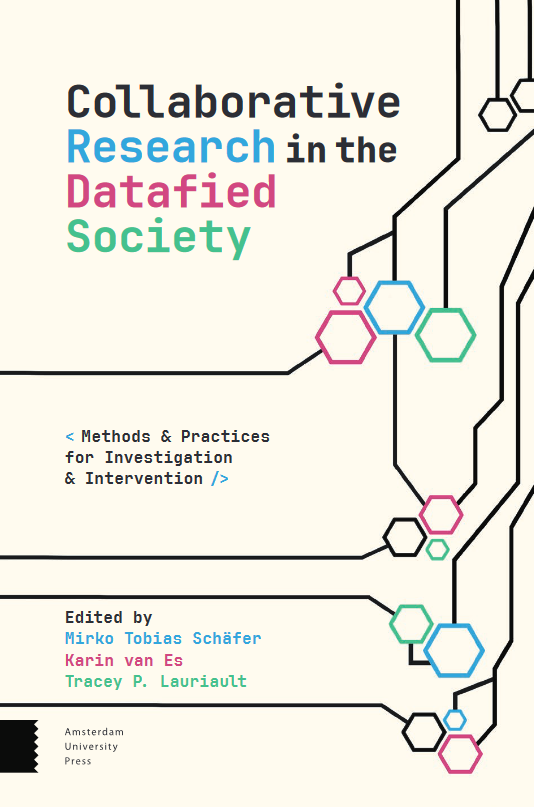
In this chapter – from the edited volume Collaborative Research in the Datafied Society, edited by Mirko Tobias Schäfer, Karin van Es, and Tracey Lauriault – authors Tatiana López, Funda Ustek Spilda, Patrick Feuerstein, Fabian Ferrari, and Mark Graham, introduce the Fairwork project and provide critical insights into its engagement with platforms as an action research strategy.
Though the digital platform economy in some contexts has created new employment opportunities, work in the platform economy has been widely criticized for its often precarious and exploitative character. One central mechanism through which digital platforms construct and conceal exploitative employment relations are information asymmetries among platforms, workers, and consumers. These information asymmetries are created through, among other things, a lack of transparency on how platforms allocate work, calculate payments, and use customer reviews for incentive structures and other rating-based work outcomes. Against this backdrop, the Fairwork project conducts action research to tackle these information asymmetries.
Read the Chapter Download the complete Book
This website uses cookies so that we can provide you with the best user experience possible. Cookie information is stored in your browser and performs functions such as recognising you when you return to our website and helping our team to understand which sections of the website you find most interesting and useful.
This cookie remains on your computer for 365 days, but you can adjust your preferences at any time by clicking on the "Cookie settings" link in the website footer.
Please note that if you visit the Oxford University website, any cookies you accept there will appear on our site here too, this being a subdomain. To control them, you must change your cookie preferences on the main University website.
This website uses the following additional cookies from third party websites:
These cookies will remain on your computer for 365 days, but you can edit your preferences at any time through the "Cookie Settings" in the website footer.
This website uses Google Tags and Google Analytics to collect anonymised information such as the number of visitors to the site, and the most popular pages. Keeping these cookies enabled helps the OII improve our website.
Enabling this option will allow cookies from:
These cookies will remain on your website for 365 days, but you can edit your cookie preferences at any time via the "Cookie Settings" button in the website footer.