Uber ( Bangladesh )

Principle 1: Fair Pay
Ensures workers earn at least the local minimum wage after costs (one point)
Ensures workers earn at least a local living wage after costs (one additional point)

Principle 2: Fair Conditions
Mitigates task-specific risks (one point)
Ensures safe working conditions and a safety net (one additional point)

Principle 3: Fair Contracts
Provides clear and transparent terms and conditions (one point)
Ensures that no unfair contract terms are imposed (one additional point)

Principle 4: Fair Management

Provides equity in the management process (one additional point)

Principle 5: Fair Representation
Assures freedom of association and the expression of worker voice (one point)
Supports democratic governance (one additional point)

Notes
The Fairwork Scoring System entails that each Fairwork Principle is divided into two thresholds. Accordingly, for each Principle, the scoring system allows a first point to be awarded corresponding to the first threshold, and an additional second point to be awarded corresponding to the second threshold. The second point under each Principle can only be awarded if the first point for that Principle has been awarded.
An explanation of how we assess platforms against these principles and the information and evidence that we gather and analyse when we make our assessment can be found here.
The above scores should be read in conjunction with these explanatory notes.
Platforms are awarded a point where there is verifiable evidence to demonstrate that the platform has achieved the relevant threshold. A blank score therefore means that there was no verifiable evidence to award a point.
A platform can therefore receive a maximum Fairwork Score of ten points.
Fairwork scores are updated on a yearly basis.
Principle 1: Fair Pay
Ensures workers earn at least the local minimum wage after costs (one point)
Ensures workers earn at least a local living wage after costs (one additional point)
Principle 2: Fair Conditions
Mitigates task-specific risks (one point)
Provides a safety net (one additional point)
Principle 3: Fair Contracts
Ensures that no unfair contract terms are imposed (one additional point)
Principle 4: Fair Management
Provides equity in the management process (one additional point)
Principle 5: Fair Representation
Assures freedom of association and the expression of collective worker voice (one point)
Supports democratic governance (one additional point)
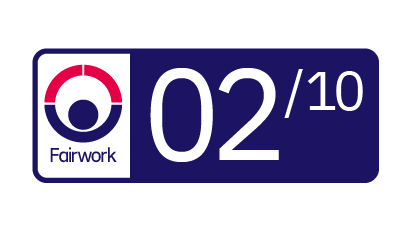
Notes
The Fairwork Scoring System entails that each Fairwork Principle is divided into two thresholds. Accordingly, for each Principle, the scoring system allows a first point to be awarded corresponding to the first threshold, and an additional second point to be awarded corresponding to the second threshold. The second point under each Principle can only be awarded if the first point for that Principle has been awarded.
An explanation of how we assess platforms against these principles and the information and evidence that we gather and analyse when we make our assessment can be found here.
The above scores should be read in conjunction with these explanatory notes.
Platforms are awarded a point where there is verifiable evidence to demonstrate that the platform has achieved the relevant threshold. A blank score therefore means that there was no verifiable evidence to award a point.
A platform can therefore receive a maximum Fairwork Score of ten points.
Fairwork scores are updated on a yearly basis.
Principle 1: Fair Pay
Ensures workers earn at least the local minimum wage after costs (one point)
Ensures workers earn at least a local living wage after costs (one additional point)
Principle 2: Fair Conditions
Mitigates task-specific risks (one point)
Provides a safety net (one additional point)
Principle 3: Fair Contracts
Provides clear and transparent terms and conditions (one point)
Ensures that no unfair contract terms are imposed (one additional point)
Principle 4: Fair Management
Provides due process for decisions affecting workers (one point)
Provides equity in the management process (one additional point)
Principle 5: Fair Representation
Assures freedom of association and the expression of collective worker voice (one point)
Supports democratic governance (one additional point)

Notes
The Fairwork Scoring System entails that each Fairwork Principle is divided into two thresholds. Accordingly, for each Principle, the scoring system allows a first point to be awarded corresponding to the first threshold, and an additional second point to be awarded corresponding to the second threshold. The second point under each Principle can only be awarded if the first point for that Principle has been awarded.
An explanation of how we assess platforms against these principles and the information and evidence that we gather and analyse when we make our assessment can be found here.
The above scores should be read in conjunction with these explanatory notes.
Platforms are awarded a point where there is verifiable evidence to demonstrate that the platform has achieved the relevant threshold. A blank score therefore means that there was no verifiable evidence to award a point.
A platform can therefore receive a maximum Fairwork Score of ten points.
Fairwork scores are updated on a yearly basis.