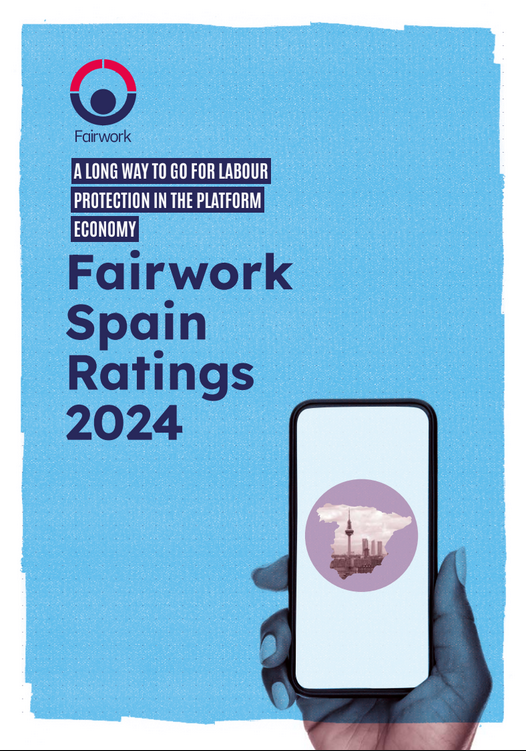
This is the first attempt to evaluate the state of work in the Spanish platform economy using the Fairwork methodology. This research evaluated the working and employment conditions of seven digital platforms in four economic sectors: delivery, in the case of Just Eat, Glovo and the cooperative La Pájara; ride-hailing, with the Cabify and Uber platforms; moving, home maintenance and mounting services, with the experience of Taskrabbit; and home cleaning services, in the case of MyPoppins.
This analysis of these seven platforms has focused on Fairwork’s five principles for ensuring fair and decent work, the contents of which are presented in detail in this report: fair pay, fair conditions, fair contracts, fair management, and fair representation.
The research found the majority of these companies were unable to evidence a minimum standard of fair work. The La Pájara cooperative obtained eight points out of a possible 10. The Just Eat platform scored seven points, while Cabify, Uber, and Taskrabbit scored just two points. The remaining two platforms, Glovo and MyPoppins have not provided sufficient evidence to be awarded any of the 10 possible points.
For the first time, we have looked at companies offering ride-hailing, food delivery, home maintenance and mounting services, and home cleaning services to rate them on how they treat their workers. This provides a helpful guide for both regulators and customers who use these platforms. The room for improvement in labour protection in the platform economy in Spain is therefore still wide: both in terms of setting more ambitious labour standards and in their effective application to the whole of a platform economy that continues to spread in through new sectors.
Alberto Riesco-Sanz
Professor of Sociology of Work, Universidad Complutense de Madrid (UCM)

Despite the progress made in Spain since the approval of the internationally innovative Rider Law, working and employment conditions in the platform economy are still precarious, with modest job quality standards. This Fairwork Spain report allows us to formulate recommendations to the platforms on how to enhance their future scores through possible organisational improvements. Our report also informs citizens who use platform services about the working conditions behind the digital applications they consume.
Arturo Lahera-Sánchez
Professor of Ergonomics, Universidad Complutense de Madrid (UCM)


Thomson Reuters Foundation News, 14 July 2022
Uber drivers from South Africa to India say they’re unsurprised by whistleblower Mark MacGann’s Uber Files exposé and still work in dangerous conditions

Espanol News, 23 March 2022